What are coastal dunes?
Coastal beaches and dunes begin with the accumulation of marine sand that is transported to the coast by waves and currents. In the case of dunes, sand is subsequently reworked by strong onshore winds (greater than 5 m/sec ) and then deposited behind the beach, principally being trapped in vegetation, but also accumulating at the base of cliffs and hills.
In Australia there is a variety of coastal dune landforms. They range from relatively small shore-parallel foredunes that sit immediately behind the beach, tens of metres wide and a few metres thick (Photo 1); to a series of relict foredunes that may extend hundreds of metres to a few kilometres inland; to large dune fields comprising transgressive or parabolic dunes that can extend hundreds of metres to several kilometres inland (Photo 2). Dune fields comprise a variety of surface dune types (e.g. transverse dunes), as well as hills and ridges that can rise a few hundred metres above the shoreline and represent long-term accumulation of large volumes of sand.
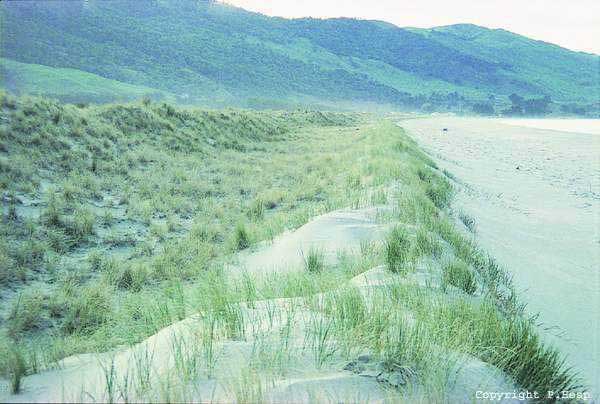
Photo 1. An incipient foredune and established foredune (Mahia Peninsula, NZ). Photo by Patrick Hesp.
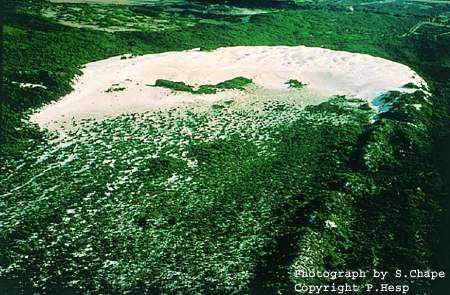
Photo 2. An active parabolic dune (300 m wide) at Dongara, WA. Photo by S. Chape used with the permission of Patrick Hesp.
What is coastal dune vegetation?
Communities of plants that grow on beaches and dunes are known as dune vegetation. There are usually three main zones of dune vegetation that are arranged roughly parallel to the coastline. The zones reflect changes in the nutrient status and moisture content of dune soils, which increase in a landward direction, and changes in the degree of exposure to strong winds, salt spray and sandblast, which decrease in a landward direction((Queensland Government. Beaches, Tides & Waves.. Queensland Environmental Protection Agency and Beach Protection Authority.)). The zones consist of:
- Herbaceous stabilising plants tolerant of strong winds, sandblast, salt spray and occasional inundation by seawater form the pioneer zone which is nearest the sea (e.g. pig face, beach spinifex, guinea flower and goatsfoot);
- Scrub or woodland plants on frontal sand dunes, including windswept shrubs and stunted trees (e.g. coastal Casuarina), vines and a smaller number of herbs; and
- Coastal heath or forest plants consisting of stunted trees and low shrubs (e.g.Melaleuca spp. in swampy areas and Eucalyptus and Acacia spp on higher ridges), behind the frontal dunes((Queensland Government. Beaches, Tides & Waves.. Queensland Environmental Protection Agency and Beach Protection Authority.)).
Beach and dune indicators
Several beach and dune related indicators have been suggested for State of the Environment reporting for Coasts and Oceans (formerly Estuaries and the Sea)((Ward, T., Butler, E. and Hill, B. 1998. Environmental Indicators for National State of the Environment Reporting, Estuaries and the Sea, Commonwealth of Australia, pp. 81 and Australian State of the Environment Committee. 2001. Coasts and Oceans: State of the environment Report 2001. CSIRO Publishing. Collingwood.)). These indicators include:
- Changes in beach and dune areas (Indicator 2.2);
- Changes in the area of dunes covered by vegetation and the main plant assemblages (Indicator 2.4); and
- The nature and cost of beach rehabilitation and stabilisation works (Indicator 7.1).
Importance of dune vegetation and beach and dune systems
The loss of dune vegetation is a major trigger for dune erosion. Dune vegetation traps windblown sand and holds it on the foredunes((Queensland Government. Beaches, Tides & Waves.. Queensland Environmental Protection Agency and Beach Protection Authority.)). The exposed, dry sand is easily mobilised by high-velocity winds and large volumes of sand can be rapidly transported, sometimes forming large depressions in the dunes termed blowouts (Photo 3). Downwind from blowouts, drifting sand can smother the surrounding vegetation and cover roads and properties (Photo 4)((Charman, P.E.V. and Murphy, B.W. (Eds) 2000. Soils: Their Properties and Management, 2nd edition. Oxford University Press.)). Dune vegetation also contains many native species and is valued as habitat and for its own intrinsic biodiversity. Beaches and dunes are important feeding, breeding and roosting grounds for sea turtles and shorebirds((Ward, T., Butler, E. and Hill, B. 1998. Environmental Indicators for National State of the Environment Reporting, Estuaries and the Sea, Commonwealth of Australia, pp. 81 and Australian State of the Environment Committee. 2001. Coasts and Oceans: State of the environment Report 2001. CSIRO Publishing. Collingwood.)).
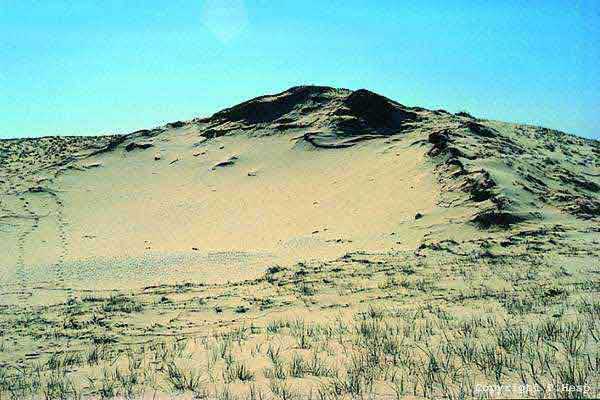
Photo 3. A blowout in the crest of a foredune at Hawks Nest, NSW. Photo by Patrick Hesp.
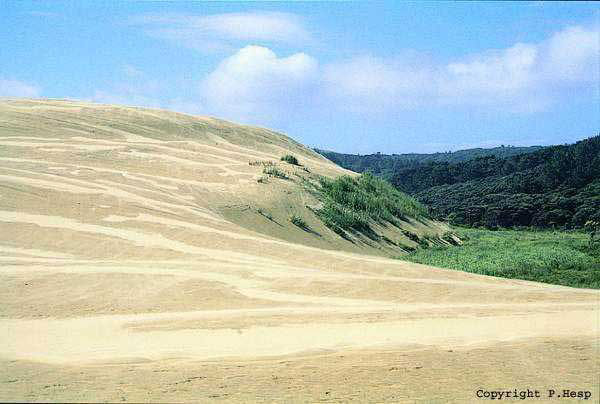
Photo 4. The downwind margin of a transgressive dunefield in NZ. Photo by Patrick Hesp.
Dunes serve as natural buffers, protecting the land from storm tides and waves of short duration, and wind. Beaches are also an important aspect of the Australian lifestyle, and have cultural significance for Indigenous people((Ward, T., Butler, E. and Hill, B. 1998. Environmental Indicators for National State of the Environment Reporting, Estuaries and the Sea, Commonwealth of Australia, pp. 81 and Australian State of the Environment Committee. 2001. Coasts and Oceans: State of the environment Report 2001. CSIRO Publishing. Collingwood.)). Some coastal dune deposits also have scientific values because they contain relatively detailed records of present, Holocene and earlier interglacial sea level high stands that can be related to global climatic change((Murray-Wallace, C.V., Banerjee, D., Bourman, R.P., Olley, J.M. and Brooke, B.P., 2002. Optically stimulated luminescence dating of Holocene relict foredunes, Guichen Bay, South Australia. Quaternary Science Reviews 21, 1077-1086.))((Bryant, E.A., Young, R.W.; Price, D.M. and Short, S.A. 1994 Late Pleistocene dune chronology: near-coastal New South Wales and eastern Australia. Quaternary Science Reviews v. 13 pp. 209-223.))((Roy, P.S., Cowell, P.J., Ferland, M.A. and Thom, B.G., 1994. Wave-dominated coasts. In: Coastal Evolution – Late Quaternary Shoreline Morphodynamics (Carter, R.W.G. and Woodroffe, C.D. Eds.), Cambridge University Press, Cambridge, pp. 121-186.)). Economically, beach and dune systems are important for the coastal tourism industry and represent an important sand resource for the construction industry and beach replenishment works. They may also contain valuable heavy-mineral sand deposits.
What causes dune vegetation and foredunes and dune fields to change?
The erosion of beaches and dunes, especially foredunes, may be a natural process and is often balanced by the supply of sand from the nearshore continental shelf to beaches by currents and waves((Woodroffe, C.D., 2002. Coasts, form process and evolution. Cambridge University Press, pp. 638.))((Hesp, P. (2002). Foredunes and blowouts: initiation, geomorphology and dynamics. Geomorphology 48, 245-268.)). In some cases, sand from adjacent dunes may replenish beach systems during erosional periods((Woodroffe, C.D., 2002. Coasts, form process and evolution. Cambridge University Press, pp. 638.)). Listed below are some human activities that have modified dunes and that can induce dune erosion, which may accelerate beach erosion.
- Loss of dune vegetation caused by grazing, fires, tracks (four-wheel drives, motor bikes, horses and dogs) and even foot traffic((NSW DLWC, 2001. Coastal Dune Management. NSW Department of Land and Water Conservation, Newcastle, pp. 96.)).
- Urban development on foredunes can have adverse impacts on beaches. Covering foredunes with buildings and then the construction of rock walls, groynes and breakwaters to protect these properties locks up this source of sand, which disrupts the natural beach sediment budget. As a consequence, the morphology of beaches can change and they may become more prone to erosion because the volume of sand circulating within the beach systems is reduced. A similar impact on dune systems may occur where coastal dunes are mined or cleared for agriculture. In severe cases, beaches require artificial nourishment with sand that has been extracted from other areas.
- Anthropogenically induced changes in climate may be responsible for a rise in sea level or an increase in the frequency of major coastal storms in certain regions. These changes can accelerate shoreline erosion and also trigger the erosion of dunes immediately behind the beach.
- The erosion of coastal dunes can exacerbate beach erosion where it represents the removal of sand from the beach sediment system.
- Exotic garden plants can tolerate coastal conditions and can displace indigenous flora, causing loss of habitat. In addition, if they are more resilient to disturbance compared to native species, they may prevent natural foredune disturbance and transgressive dune development((Hilton, M. and Harvey, N. 2002. Management implications of exotic dune grasses on the Sir Richard Peninsula, South Australia. Proceedings of Coast to Coast 2002 – “Source to Sea”, Tweed Heads, pp. 186-189. )).
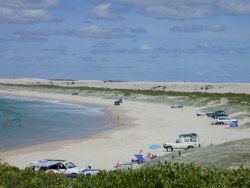
Photo 5. Recreational use of beaches and dunes at Dark Point in Myall Lakes National Park: (a) 4WD vehicles on beach; and (b) tobogganing down a dune (photos by Caroline Wenger).
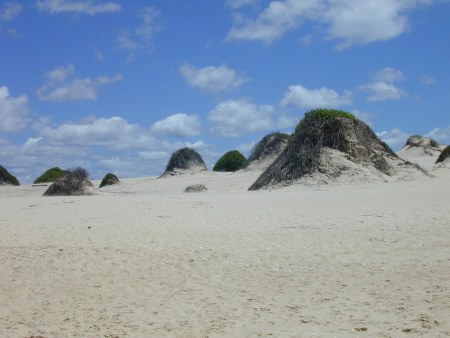
Photo 6. Bitou bush humps at Dark Point in Myall Lakes National Park (Photo by Caroline Wenger). Bitou bush (Chrysanthemoides monilifera) is a weed of national significance. The South African native was planted along the coast in NSW between 1946 and 1968 to reduce dune erosion. The weed has since spread inland by up to 10 km and is now found along 80% of the coastline. The species can out-compete and replace native flora, destroying the food source for native animals and creating an environment that is favourable for colonisation by other highly invasive weeds. http://www.environment.gov.au/biodiversity/invasive/weeds/publications/guidelines/wons/c-monilifera-rotundata.html
Coastal areas most susceptible to erosion
Coastal areas that comprise unconsolidated sediments are typically dynamic systems, and their responses to disturbance may be difficult to predict. However, some beach dune systems may be considered more at risk to erosion after human disturbance. These include prograded or stationary barriers on coastlines with either a low shelf-sediment supply, little ‘protection’ offered by rocky headlands, or direct exposure to strong wave energy or longshore drift currents((Chapman, D. M., Geary M., Roy, P. S. & Thom B. G. 1982. Coastal Evolution and Coastal Erosion in New South Wales. Coastal Council of New South Wales, pp. 341.)).
Restoration
Reducing the disturbance of dunes is an obvious method of controlling erosion problems. Land-use planning needs to ensure buildings and infrastructure are positioned behind the dune system. Land conservation groups recommend the careful retention of vegetation in sensitive areas and revegetation activities in cleared areas. This needs to be combined with the restriction of vehicular and human traffic((NSW DLWC, 2001. Coastal Dune Management. NSW Department of Land and Water Conservation, Newcastle, pp. 96.)).
Considerations for measurement and interpretation
Beach and unvegetated dune areas can be estimated from aerial photography or satellite imagery at 1:25 000 scale((Ward, T., Butler, E. and Hill, B. 1998. Environmental Indicators for National State of the Environment Reporting, Estuaries and the Sea, Commonwealth of Australia, pp. 81 and Australian State of the Environment Committee. 2001. Coasts and Oceans: State of the environment Report 2001. CSIRO Publishing. Collingwood.)).
The cost of beach rehabilitation can be estimated from the number and dollar costs of beach nourishment programs and the number and dollar costs of walls, groynes and ramparts((Ward, T., Butler, E. and Hill, B. 1998. Environmental Indicators for National State of the Environment Reporting, Estuaries and the Sea, Commonwealth of Australia, pp. 81 and Australian State of the Environment Committee. 2001. Coasts and Oceans: State of the environment Report 2001. CSIRO Publishing. Collingwood.)).
Existing information and data
Special-purpose studies have been undertaken in most states and have created a baseline of historical data. However, different methods may create problems for inter-comparisons between studies.
The the Department of Environment, Water, Heritage and the Arts website provides guidelines for monitoring and State of Environment Reporting of beach and dune indicators.
Other information.
Useful websites
Impact of storms on foredunes and dunes Well-documented cases studies of coastal erosion Dunecare (a project in NSW supported by Coastcare).
1. Short, A.D., Trembanis, A.C. and Turner, I.L. 2000. Beach oscillation, rotation and the Southern Oscillation, Narrabeen Beach, Australia. Coastal Engineering, 3, 2439-2452.
Author
Brendan Brooke, Geoscience Australia
Contributors
Patrick Hesp, Louisiana State University
David Ryan, Geoscience Australia